
Hoyt Games
David L. Hoyt and Colin Morgan,
Co-Founders
Tacoma, Washington & Karlsruhe, Germany

Social Module
Hoyt Games is making learning feel like play
David L. Hoyt (aka “the world’s most-syndicated daily word game creator”) and his best friend Colin Morgan founded Hoyt Games in 2018, a boutique mobile app studio that publishes word and trivia games, but with a “sneaky educational” twist. In other words, people would learn something by playing their games before they even realized what was happening. Today, their free-to-play puzzle games reach players all over the world, letting them solve puzzles, come back for more, and learn something along the way, all supported by an ad-based model that keeps the games free-to-play.
Enter David and Colin
David L. Hoyt lives in Washington State. Colin Morgan lives in Karlsruhe, Germany.
You’d think that the distance would pose a challenge for these two co-founders, but for David and Colin, it’s just another Tuesday.
They talk all the time. If you were to eavesdrop, you’d hear David joking on the line from Washington. Then Colin deadpans from Germany.
It’s the soundtrack to an age-old friendship, equal parts business meeting and friendship routine. David brings his big personality to the table; Colin brings his understated wit; and in the space between, a business has managed to flourish.
“I love working with Colin,” David would exclaim over and over. “Seriously.”
To learn how this odd couple partnership of theirs came about, you’d have to go back to Chicago, long before there were apps, before there was any kind of company letterhead, in fact, before there was even a Colin.
In the beginning, it was just David, working as an options trader on the floor of the Chicago Board Options Exchange, when one day a colleague brought in a board game, and then mentioned the company behind it.
“I was like, you mean you can make money inventing games? Are you kidding me?”
It was the spark David needed. He quit his day job, moved into a studio apartment, and gave himself four years to make it as a game inventor.
And he hasn’t looked back since.
David was able to stake out an entirely new career for himself in games: he sold ideas to major toy companies and started to build a reputation as something of a puzzle savant.
Enter Colin.
An architect by trade, Colin was a fellow game-lover. He and David met at a company gathering where David’s wife worked, then became close friends over racquetball, pub visits and, obviously, board games.
Colin admittedly loved German-style games himself, fitting since he was going to be moving to Germany to be closer to his wife’s family.
At first, the move seemed like it might mark the end of their friendship, but it turned out to be just the beginning.
“David said to me, ‘Hey Colin, you can be an architect, or you can work with me making games, and we’ll make a fortune,’” Colin remembers. “And I said, ‘I hate job hunting, so that sounds pretty good.’”
And so began their long-distance working relationship: making puzzle books and page-a-day calendars one day, pitching physical games the next.
But, over time, both grew weary of waiting for other people to approve and produce their ideas. They wanted more control over the full experience- “soup to nuts” as they said.
“That was when I started learning computer programming,” Colin says, because they had decided that the solution to the gatekeeper problem was to develop mobile games themselves. That was how they’d own the whole process.
Then David gave Colin’s self-taught programming crash course a friendly little shove: in a meeting with a potential partner, he announced that Colin could build them all a prototype— in two months, no less.
And Colin, to his credit, answered the call: he got to work, learned from YouTube videos, and eventually became the only person David trusts to turn his puzzle visions into actual living, breathing apps.
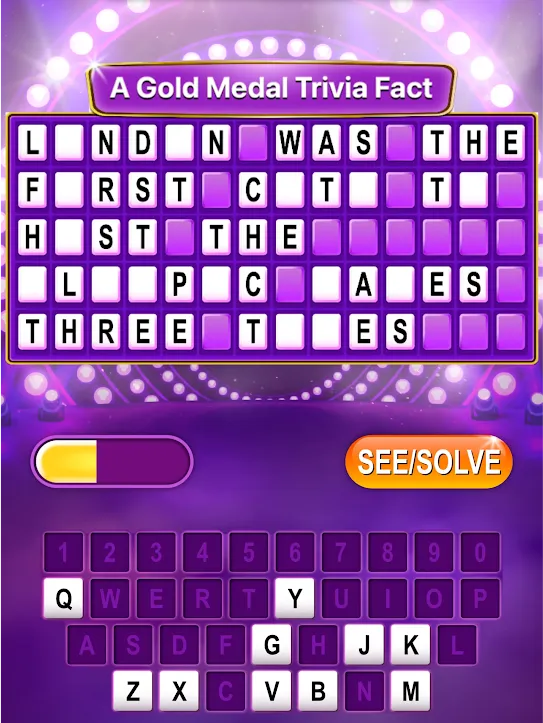
And that’s how, in 2018, Hoyt Games officially arrived onto the scene, with Word Search World Traveler as its flagship game, then following it up with such titles as Word Search World Hollywood and See and Solve Trivia Game Show.
And while their games are built all around word searches and trivia, David likes to refer to them as “sneaky educational.”
That’s because David gets that people don’t really go looking for games to play because they want to learn something; they just want to play.
So Hoyt Games designs puzzles that most importantly feel fun; they get players to solve a puzzle, get them to smile and to come back for more.
Then, before they know what’s happening, they’ve learned a little something or two about geography, language, history, current events, whatever else David has tucked into the puzzle that day.
Press play for free
But for this “sneaky educational” to really work, they needed people to actually get their hands on the games and play the puzzles. And that’s how they landed on using an ad-supported business model for Hoyt Games.
“Our goal is to make our apps accessible to the widest possible audience, and an ad-supported model allows us to do that effectively. With our focus on “sneaky educational” experiences, broad reach is essential—we want as many people as possible to engage with our content and benefit from it,” they explain.
It gave David and Colin a means to keep the games free-to-download and play, while still letting them earn enough revenue to support themselves: “From the beginning, ad revenue has always been an important piece of our overall revenue stream. It is consistent and grows consistently as we increase our install base.”
Colin was also thoughtful about how ads would show up in their games, particularly their frequency. After all, players could only tolerate so many ads while they were playing at any given time.
So, he did his homework. He played other similar games, kept tabs on their ad frequencies, and then cut that number in half when it came to Hoyt Games. “That’s been our recipe for success,” Colin says. “People see ads, but they’re not inundated with them.”
Colin didn’t stop there, though. He was also deliberate about the quality of the ad experience itself, meaning “the ads are not deceptive,” he elaborates.
That’s also why he chose to ultimately go with AdMob as their monetization partner. “Our users don’t have to click the button six times to get out of the ad,” he says, referring to AdMob’s ad quality standards.
That same intentionality runs across how David and Colin use other tools to support the business.
Take AI. While David still keeps AI out of the puzzle-making process, it still has its place in his workflow: as an assistant. For instance, he’ll use it to shorten text that will not fit on screen, maybe rework some wording to hit the right note, perhaps brainstorm facts (which he later double-checks).
As for Colin, since he’s not formally trained in programming, he likes to use AI to help him with code reviews, investigate crashes, even kick the tires on early design ideas.

"Our goal is to make our apps accessible to the widest possible audience, and an ad-supported model allows us to do that effectively."
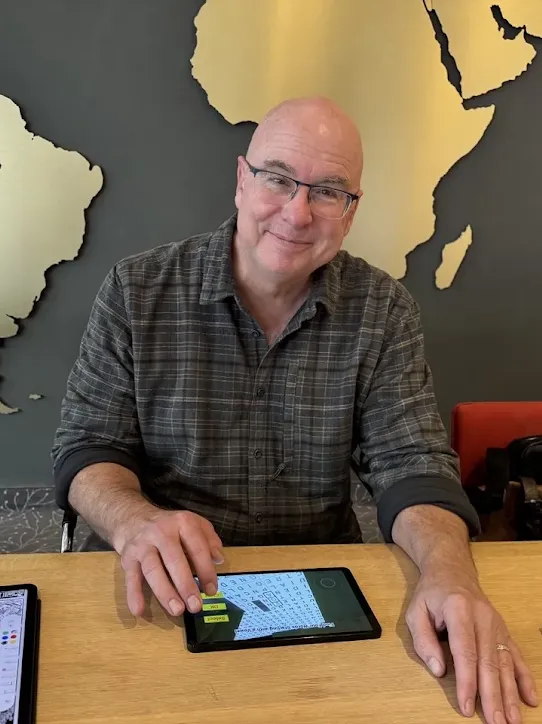
Education for all
But whatever the tech that’s involved, David and Colin still keep themselves approachable to any players: Colin personally answers support emails, and David’s email is out there for anyone to find.
And that’s precisely how Kirk Dietz, a sixth-grade teacher at Sleepy Hollow Middle School in New York got a hold of David. Kirk reached out about using puzzles in the classroom, and soon enough the connection evolved into a whole program where students now help to create puzzles for Hoyt Games, and beyond.
As a matter of fact, through the program, students have gotten to work with David to create Jumble puzzles that would appear in newspapers around the country.
For this, the education is more direct: the kids start to figure out wordplay, cartooning, collaboration, all manner of things to consider when making a puzzle, or for approaching life in general.
And David just loves the sense of pride that these experiences instill in the students. “They get to say, ‘I helped David make that.’”
The work goes well beyond Kirk’s classroom. David and his wife have also started an education foundation connected to his games, titles like Giant Word Winder and Giant Math Winder, with the dream of one day bringing them to each and every school and library in the world.
And while COVID threw a wrench in things, they haven’t given up on that vision. David’s plan now is to keep growing Hoyt Games until he and Colin can help fund that dream themselves.
In terms of what’s on the horizon for Hoyt Games, David and Colin say that they have more apps in development, plus initiatives that run the gamut of hiring more people to finding partners that can help with app discovery and promotion.
When asked whether he’d build apps with a bigger company instead, David says, practically on cue, “no chance. Colin and I are doing this together.”
Then that means every day, somewhere, a player gets to solve a puzzle, a student gets to see their idea come to life and someone learns something before it ever feels like a lesson.
And behind all of it, two best friends and business partners in “sneaky education” get to keep making great games together.

About the Publisher
SHARE THIS STORY
Social Module